
Introduction
The most common question when making a puzzle is "how many pieces?" The honest answer is: it depends on who's solving, how much time they have, and how much challenge they want. Here's a practical way to decide.
What each piece count feels like
The piece count is the main difficulty lever — but not the only one.
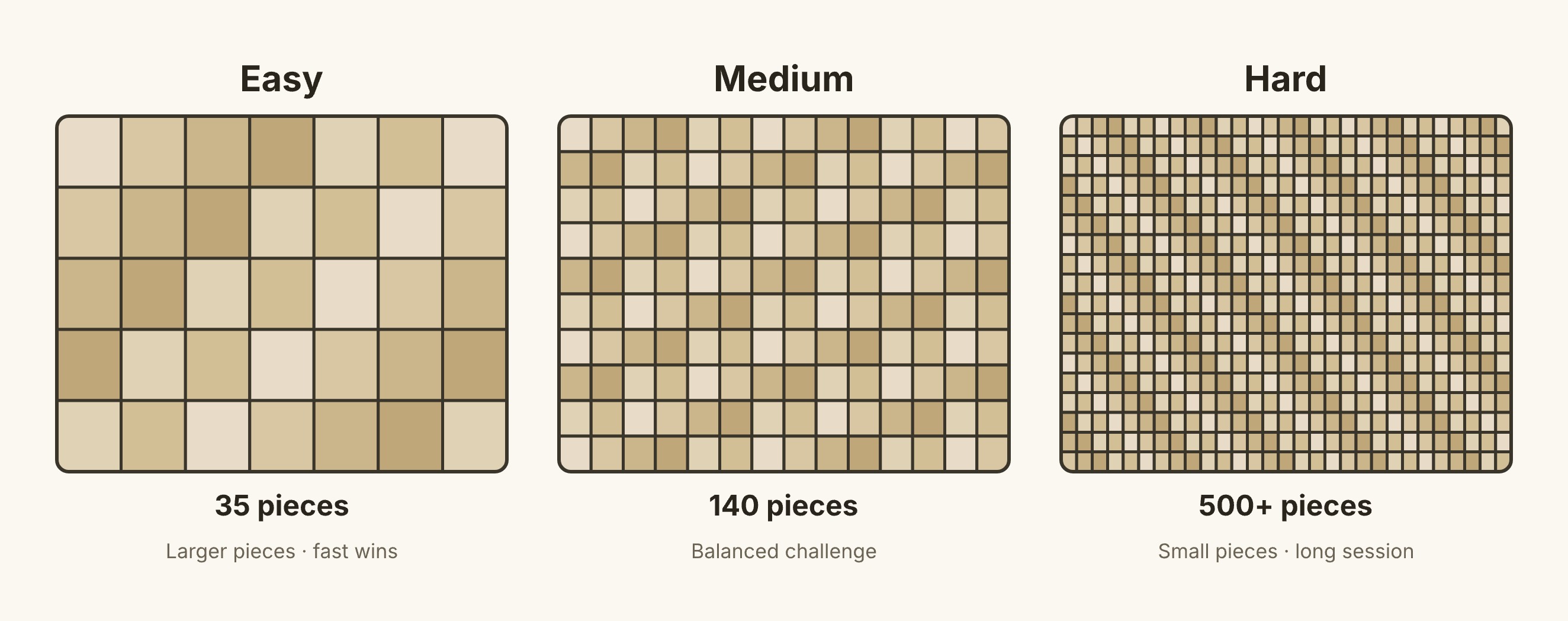
- 35 pieces (5–15 min) — quick and accessible. Good for young kids, a short break, or someone trying the interface for the first time. Each piece covers a lot of image, so matching is easy.
- 70 pieces (15–45 min) — a casual challenge you can finish in one sitting. The sweet spot for family puzzle time and adults new to puzzles.
- 140 pieces (45 min–2 hr) — genuinely engaging. Solvers need a strategy: sort edges, find color regions, work section by section.
- 280+ pieces (2–6+ hr) — an extended, multi-session project. Progress is incremental and finishing feels like a real accomplishment.
Beyond piece count
Two puzzles with the same count can feel completely different.
Image complexity. Varied colors, clear subjects, and detail in every corner make a puzzle easier. Limited palettes, large uniform areas, and subtle gradients make it harder. A 140-piece colorful garden can be easier than a 70-piece foggy landscape — always weigh the image alongside the count.
Screen size. The same puzzle changes with the device: pieces are easy to see on a desktop, balanced on a tablet, and small and fiddly on a phone. For higher counts, a bigger screen helps a lot.
Solver mood. This sounds soft, but it matters. A tired person at the end of the day needs a different puzzle from someone sitting down for a long weekend challenge. If the puzzle is meant to relax someone, choose fewer pieces and a clearer image.
Matching difficulty to who's solving
A quick reference for choosing a count:
- Kids 3–5: 35 max, colorful and familiar subjects
- Kids 6–12: 35–140, scaling up with age and persistence
- New adult puzzlers: start at 70 to build confidence
- Enthusiasts: 140–280+ for longer sessions
- Groups (2–4 people): 140–280 with distinct regions so everyone works at once
When unsure, go one tier lower. A puzzle that's slightly too easy beats one that's frustratingly hard.
Estimating completion time
Individual speed varies, but rough numbers help with planning:
| Pieces | Beginner | Intermediate | Expert |
|---|---|---|---|
| 35 | 15 min | 8 min | 3 min |
| 70 | 45 min | 20 min | 10 min |
| 140 | 2 hours | 1 hour | 30 min |
| 280 | 4+ hours | 2 hours | 1 hour |
Not every puzzle needs finishing in one go — online puzzles save progress, so higher counts can be a multi-session project.
A simple decision rule
When you are choosing for someone else, use this order:
- Start with the time available.
- Check the image complexity.
- Adjust for device size.
- Lower the count if the puzzle is a gift, classroom activity, or first try.
Example: a colorful pet photo for a casual adult on a laptop might work at 140 pieces. The same count on a phone will feel cramped, so 70 pieces is safer. A foggy mountain photo may need to drop again because the color regions are too similar.
Signs you picked the wrong difficulty
You picked too many pieces if the solver spends most of the session sorting without placing anything. You picked too few if the picture is obvious after the first minute and there is no satisfying middle section.
For online puzzles, the best fix is quick: restart with a lower or higher count. For a downloaded file you plan to print yourself, test the puzzle online first. It is much cheaper to adjust the count before you use paper or a local print service.
A tip for gifts and classrooms
If you're making a puzzle for someone else, err easier and consider building the same image at two counts — an easy version and a harder one — so the recipient can choose based on their time and mood. The goal is enjoyment, not a test.
For classrooms, I usually treat the puzzle as a conversation tool, not the final assessment. A slightly easier puzzle leaves more time for the prompt after it. For gifts, the same logic applies: the person should enjoy recognizing the image, not feel trapped by it.


